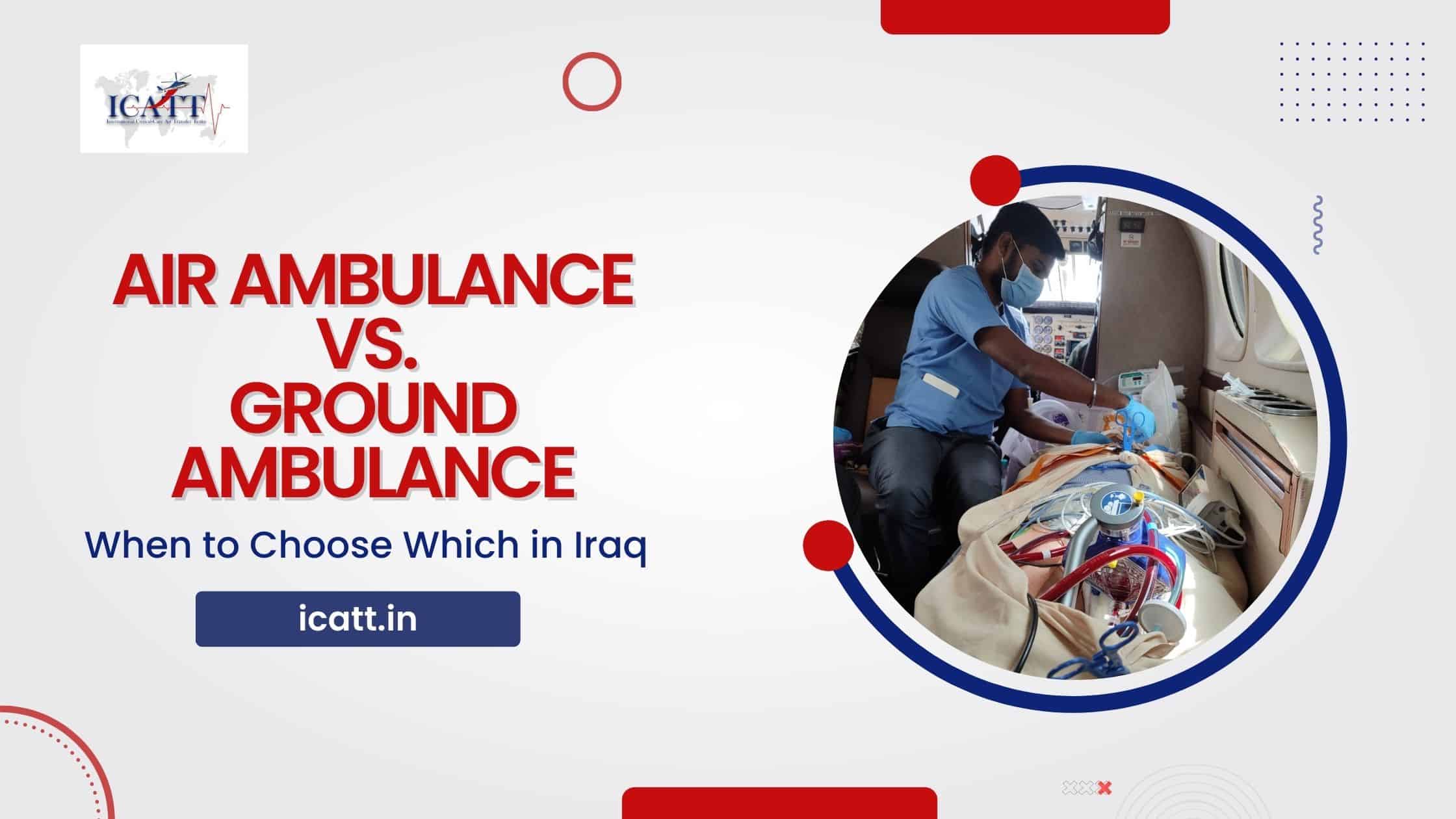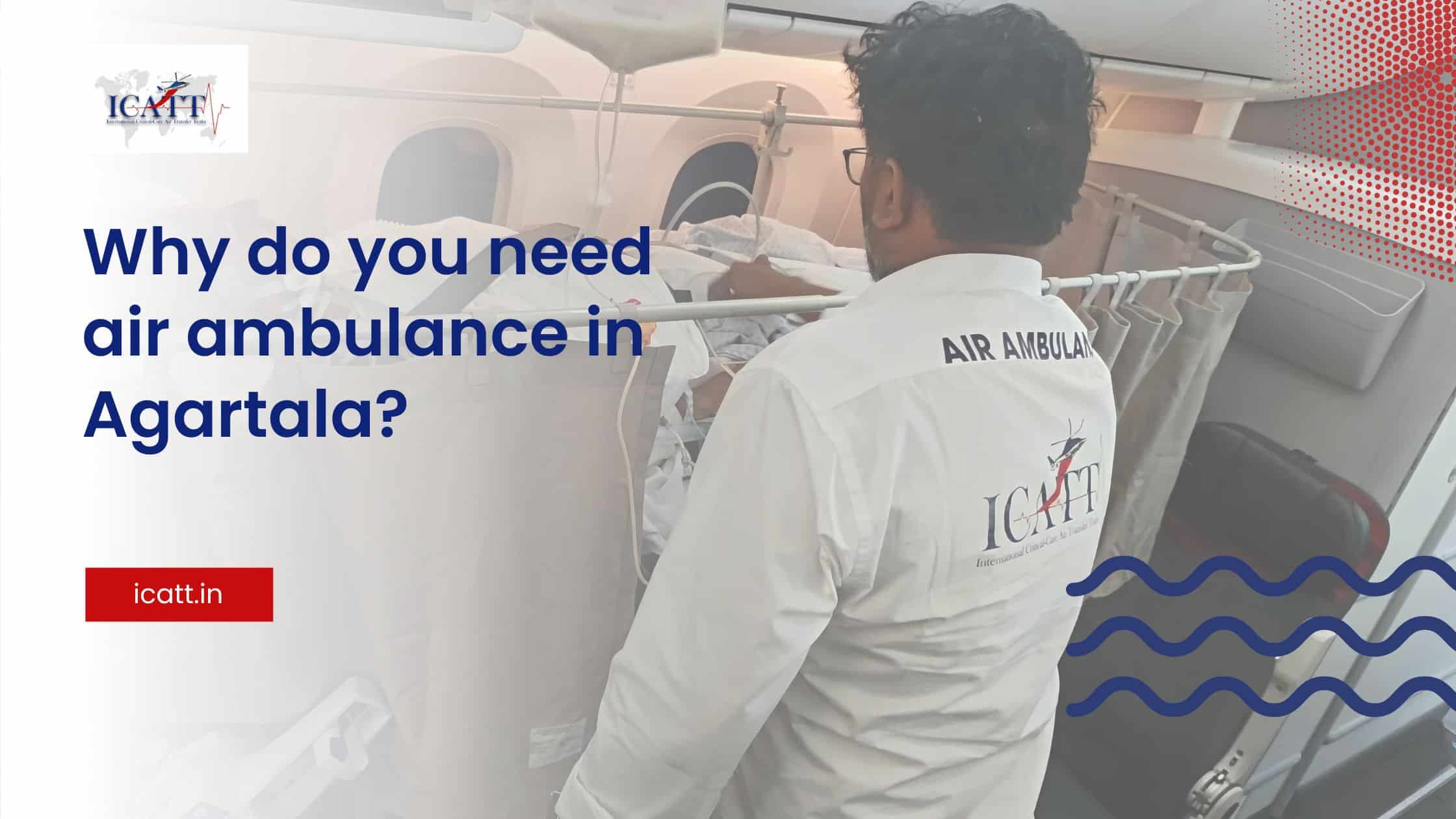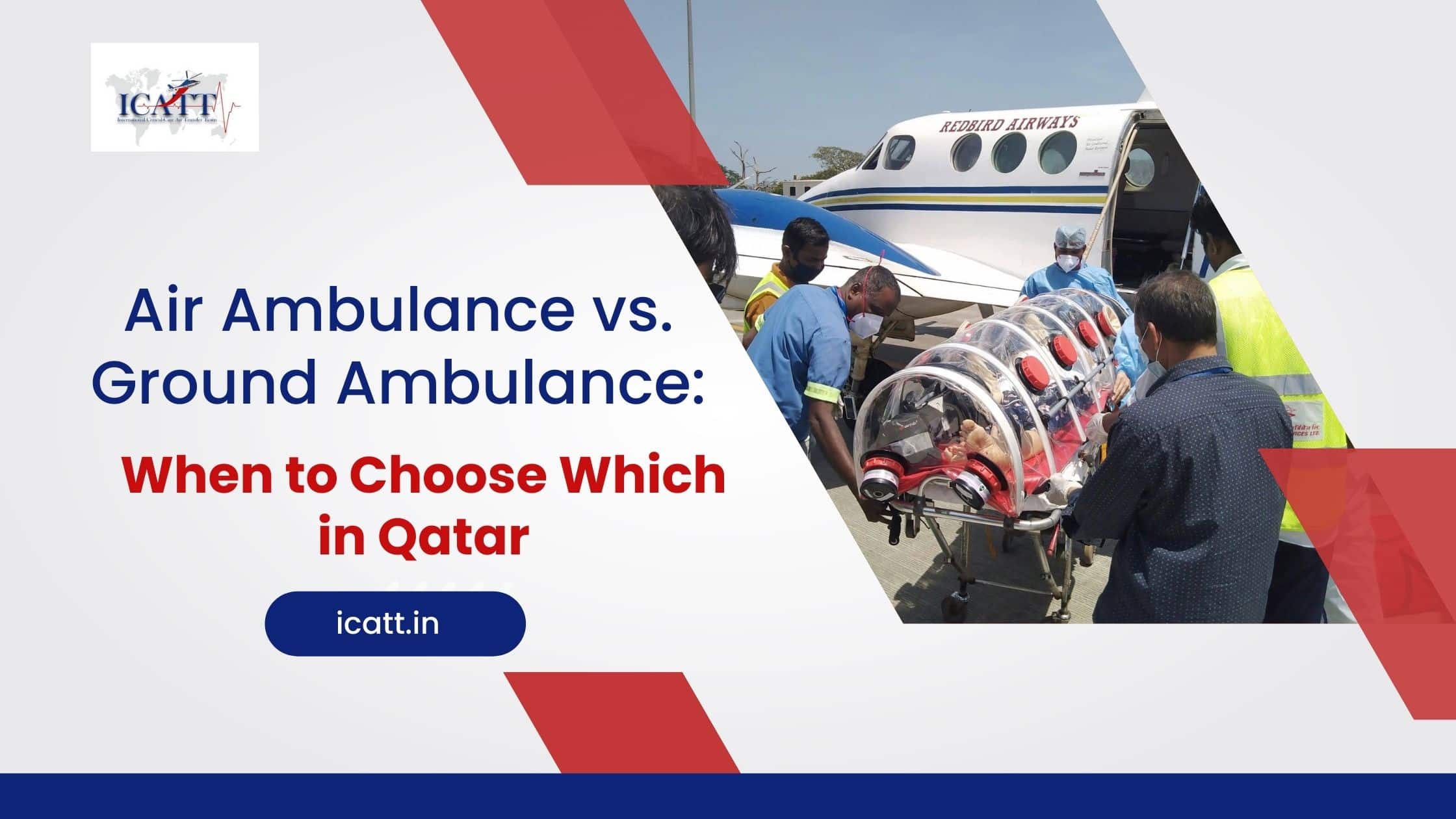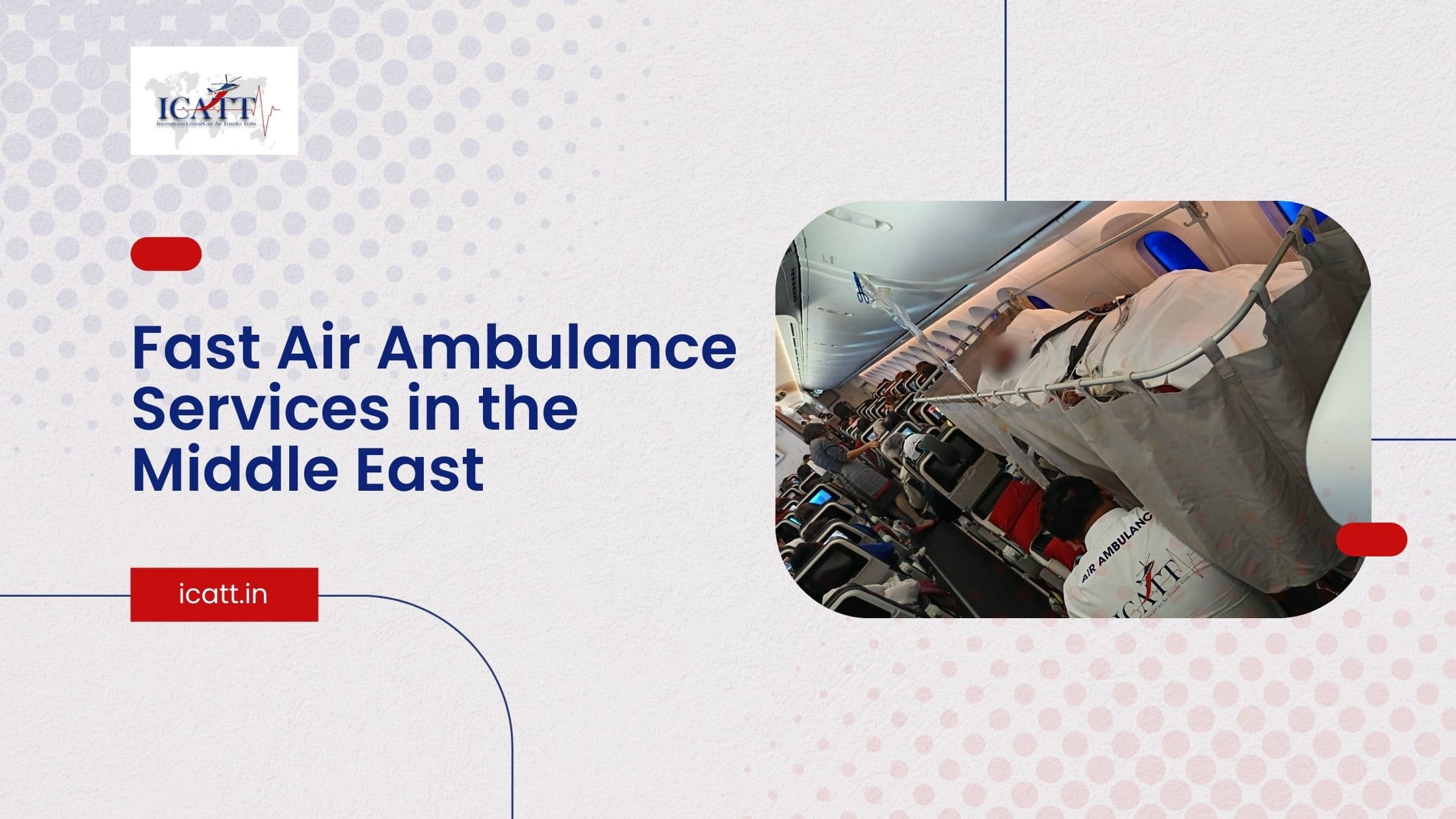
Choose air ambulance in Oman when the patient has a time-critical condition (stroke, cardiac event, major trauma), requires ICU-level care during transfer, or needs to cross long distances or international borders. Choose ground ambulance when the patient is stable, the destination is within urban road range, and road time is clinically safe. When in doubt, call ICATT — our clinical team assesses urgency and recommends the right option 24/7
What matters more in a medical emergency, comfort or time? Medical outcomes often depend on how quickly a patient reaches the right level of care and what support is available during the journey. Oman’s geography can extend road travel times, so transport choice becomes a clinical decision rather than a logistical preference. Patient stability further shapes this decision because a stable patient may tolerate longer travel, whereas an unstable patient may require faster access to advanced intervention.
A structured decision framework reduces uncertainty and limits avoidable delay because it aligns transport choice with clinical urgency and destination capability. This guide explains when to choose an air ambulance in Oman by evaluating medical severity, travel time risk, and hospital readiness. The focus remains practical, so families and clinicians can apply clear criteria under pressure and make time-sensitive decisions with confidence.
Core Differences Between Air Ambulance And Ground Ambulance in Oman
Ground ambulances support rapid local pickup and direct road transfer to a receiving facility. It allows for door-to-door continuity with fewer transition points and minimal handovers. In contrast, air transfer reduces travel time across long distances and remote routes. It can also provide higher-acuity monitoring during the journey, depending on the level of medical support arranged.
Air ambulance Oman services are typically used for urgent intercity transfers and international medical transfers where speed and clinical capability during transport matter. Ground ambulances remain appropriate for many situations where the patient is stable and the road time stays clinically safe.
Oman’s terrain includes mountainous interior regions, extended coastal highways, and remote industrial zones. The Muscat–Salalah highway alone is approximately 1,000 km. In these geographies, the difference between air and ground transfer time can be the difference between neurological survival and permanent damage.
In the following sections, we will explore the core differences between air ambulance and ground ambulance in Oman so that the choice becomes clear and medically sound.
Top Reasons To Choose an Air Ambulance In Oman
Here are the top reasons to choose an air ambulance in Oman and to understand when to choose an air ambulance in Oman based on urgency and the required level of medical care:
- Time-Sensitive Medical Emergencies With Narrow Treatment Windows
Air ambulance Oman becomes clinically appropriate when delay affects survival or neurological outcome. Acute myocardial infarction and intracranial hemorrhage require rapid access to advanced intervention centers. The value of air transfer lies in reducing total transfer time so definitive treatment can begin within medically accepted therapeutic windows. - Long-Distance Transfers Across Oman’s Remote Geography
Remote regions and extended highway corridors can push road transfer beyond safe physiological tolerance. Prolonged ground transport increases exposure to hemodynamic instability and fatigue-related monitoring risk. Air transfer reduces transport duration and limits prolonged physiological stress during critical transfers. - Need For Advanced In-Transit Critical Care Support
Some patients require ventilator management or continuous cardiac stabilization during transfer. These cases require a transport setting capable of maintaining ICU-level oversight throughout the journey. Air medical teams support high-acuity care and can respond quickly when deterioration occurs during transit to tertiary hospitals. - Urgent Interfacility Transfers To Tertiary And Specialist Centers
Secondary facilities often stabilize complex cases and then transfer patients to centers with neurosurgical services or advanced trauma capability. Air transport reduces the time gap between stabilization and definitive treatment when delay is clinically unsafe. This approach supports continuity of care and lowers the likelihood of deterioration between facilities. - International Medical Evacuation And Cross-Border Transfers
International repatriation requires coordinated hospital-to-hospital transfer with structured medical oversight. Air transfer provides a controlled environment for long-distance movement with continuous monitoring and treatment support. This option becomes essential when patients must travel beyond national borders for specialized care.
Need Emergency Air Ambulance in Oman? Contact ICATT Now — Available 24 Hours, 7 Days a Week
Top Reasons To Choose Ground Ambulance In Oman
Here are the top reasons to choose ground ambulance in Oman when patient stability, road accessibility, operational simplicity, and cost efficiency determine safe medical transfer:
- Clinically Stable Patients With Low Time Risk
Ground ambulance transport remains appropriate when the patient is hemodynamically stable and does not require advanced in-transit critical care. Stable fractures and non-critical post-procedure transfers can be managed safely with standard emergency equipment and monitoring. - Short To Moderate Distance Urban Transfers
Road networks allow predictable and efficient transport times within Muscat and other major urban centers. Direct door-to-door transfer reduces transition points and minimizes coordination complexity. Ground ambulances provide safe and efficient movement for many emergency transport Oman cases within city limits. - Lower Operational Complexity And Faster Dispatch Setup
Ground transport does not require aviation clearance or airspace coordination. Fewer logistical layers can shorten dispatch activation in certain scenarios. Operational simplicity reduces administrative delay when rapid but non-critical movement is required. - Weather And Airspace Reliability Considerations
Air operations may be restricted due to visibility conditions or regulatory constraints. Ground ambulances operate in a wider range of environmental conditions, which supports continuity of care even when aircraft deployment is limited. - Cost-Effective Solution For Non-Critical Transfers
Aircraft-based medical transport carries a higher operational cost due to aviation infrastructure and specialized crew configuration. Ground ambulance services provide a more economical option for scheduled interfacility transfers or stable patient relocation where speed does not determine outcome.
Air Ambulance Preparation Checklist for Oman Transfers
Here is a preparation checklist to guide when to choose air ambulance in Oman and to support safe and time-sensitive aeromedical coordination during critical transfers.
- Clinical Readiness Checklist
- Definitive airway management plan confirmed with backup airway strategy and required equipment available
- Oxygen requirements assessed with appropriate monitoring and ventilatory support arranged
- Hemodynamic support plan documented with a clearly defined medication protocol and infusion strategy
- Operational Readiness Checklist
- Receiving hospital acceptance formally confirmed with bed availability and specialty team readiness verified
- Comprehensive clinical summary prepared with required identification and transfer documentation completed
- Ground transfer segments coordinated at both origin and destination with clearly defined clinical handoff points
Ground Ambulance Preparation Checklist for Oman Transfers
Here is a ground ambulance preparation checklist for Oman transfers to support safe and well-coordinated road-based medical movement:
1. Clinical Readiness Checklist
Clinical stability should be verified before movement begins, especially when travel time may extend beyond initial expectations.
Clinical Readiness Priorities
- Airway patency assessed with a structured airway management plan and immediate access to advanced airway equipment
- Oxygen requirements clinically evaluated with monitoring systems calibrated and fully operational
- Analgesia strategy defined based on patient condition with scheduled reassessment intervals documented
- Risk of clinical deterioration systematically evaluated with a predefined escalation and contingency protocol established
Clear documentation supports continuity because the receiving team must understand what has already been administered and what changes occurred during transit.
2. Operational Readiness Checklist
Operational preparation ensures that transport flow remains uninterrupted from pickup to hospital handover.
Operational Readiness Priorities
- Receiving facility acceptance formally confirmed with estimated time of arrival communicated to the clinical team
- Primary transport route evaluated for traffic flow and road conditions, with contingency routes predefined
- Patient identification documents verified, and a comprehensive clinical summary prepared for continuity of care
- All medical devices and monitoring equipment secured and safety-checked for road transport stability
- Structured handover documentation prepared to support rapid clinical transition upon arrival at the receiving facility
Emergency transport in Oman becomes more efficient when structured communication accompanies physical transfer. A clear handover reduces duplication of assessment and supports faster continuation of care at the receiving facility.
Air Ambulance Vs. Ground Ambulance in Oman: A Quick Comparison
Here is a quick comparison of air ambulance vs. ground ambulance in Oman to help determine the most clinically appropriate transport option based on distance and level of care required:
| Criteria | Air Ambulance in Oman | Ground Ambulance in Oman |
| Speed Over Long Distances | Fastest option for intercity and remote transfers | Suitable for short to medium distances |
| Best For | Critical and time-sensitive cases such as trauma, stroke, and cardiac emergencies | Stable patients and non-life-threatening conditions |
| Geographic Access | Ideal for remote areas and long highway routes | Best within cities and well-connected road networks |
| Medical Capability During Transfer | Advanced monitoring and critical care support based on configuration | Standard emergency monitoring and stabilization support |
| Interfacility Transfers | Preferred when tertiary or specialist care is urgently required | Suitable when time risk remains low |
| Cost Consideration | Higher operational cost due to aircraft and medical crew | More cost-effective for routine transfers |
| Weather Impact | May be affected by weather and airspace conditions | Less affected unless roads are blocked |
| Door-To-Door Continuity | Requires coordination with ground transfer at both ends | Direct pickup and direct hospital drop-off |
Practical Summary: Choosing The Right Mode In Oman
Ground ambulances suit stable transfers with safe road time and straightforward routing. Air ambulance Oman becomes the preferred option when rapid transfer directly safeguards patient stability and preserves access to time-critical treatment, because speed and clinical capability together determine outcome quality during high-risk emergencies. A clear framework improves outcomes because it aligns urgency with time savings and aligns monitoring needs with the patient’s risk profile.
Need reliable and time-critical medical transfer support?
Contact ICATT for professional air ambulance coordination across Oman and beyond.