How many minutes can the brain tolerate without oxygen? How long can cardiac muscle survive without reperfusion? Transport time directly influences patient outcomes during emergencies. The decision between air and ground services in Qatar, therefore, extends beyond logistics. It becomes a clinical judgment grounded in risk assessment and measurable timelines.
This blog explains how emergency transport in Qatar functions within a structured clinical framework. It provides evidence-based clarity on when to choose air ambulance in Qatar and outlines when ground services remain the medically appropriate option.
Overview of Air Ambulance Services in Qatar
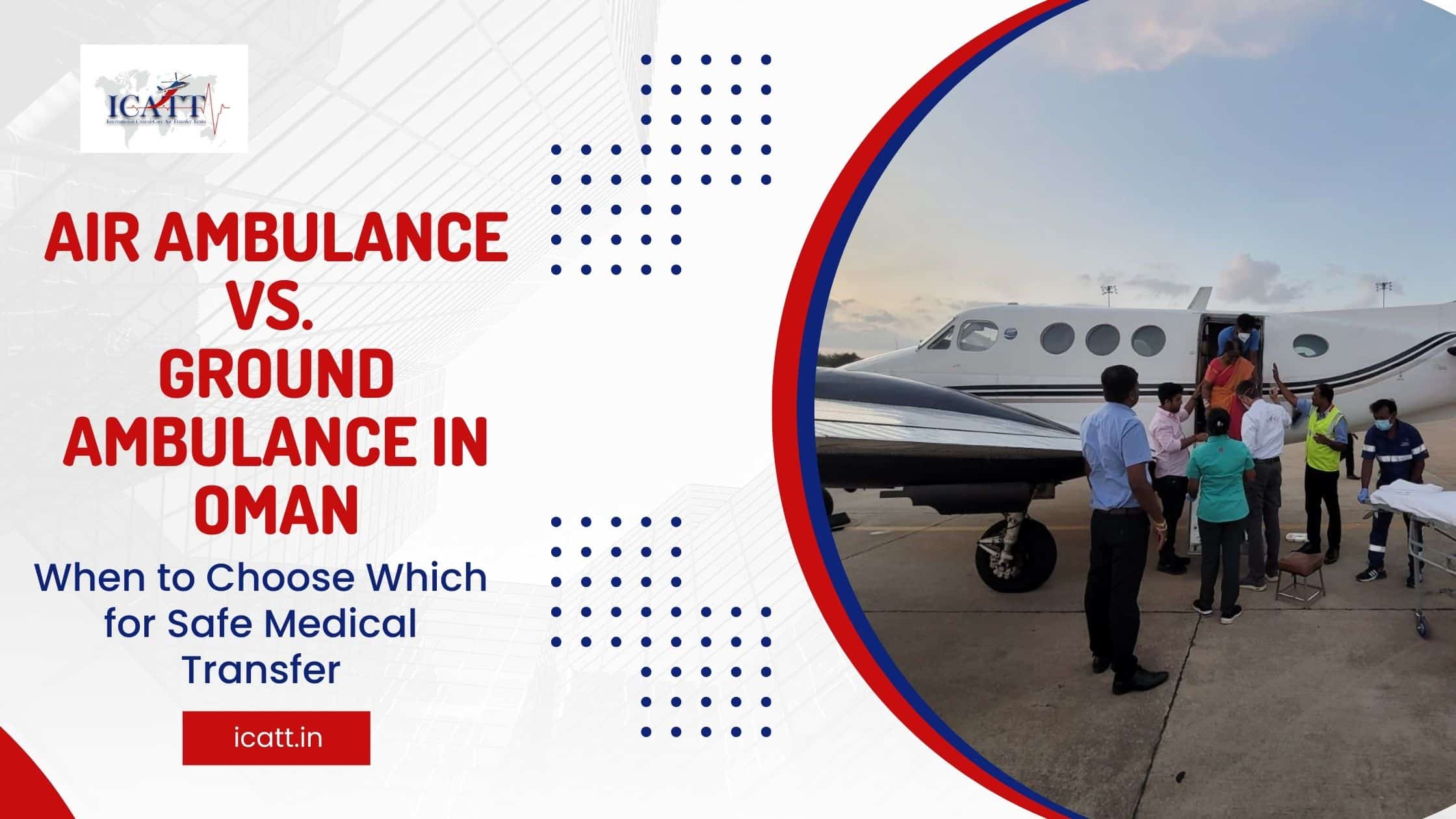
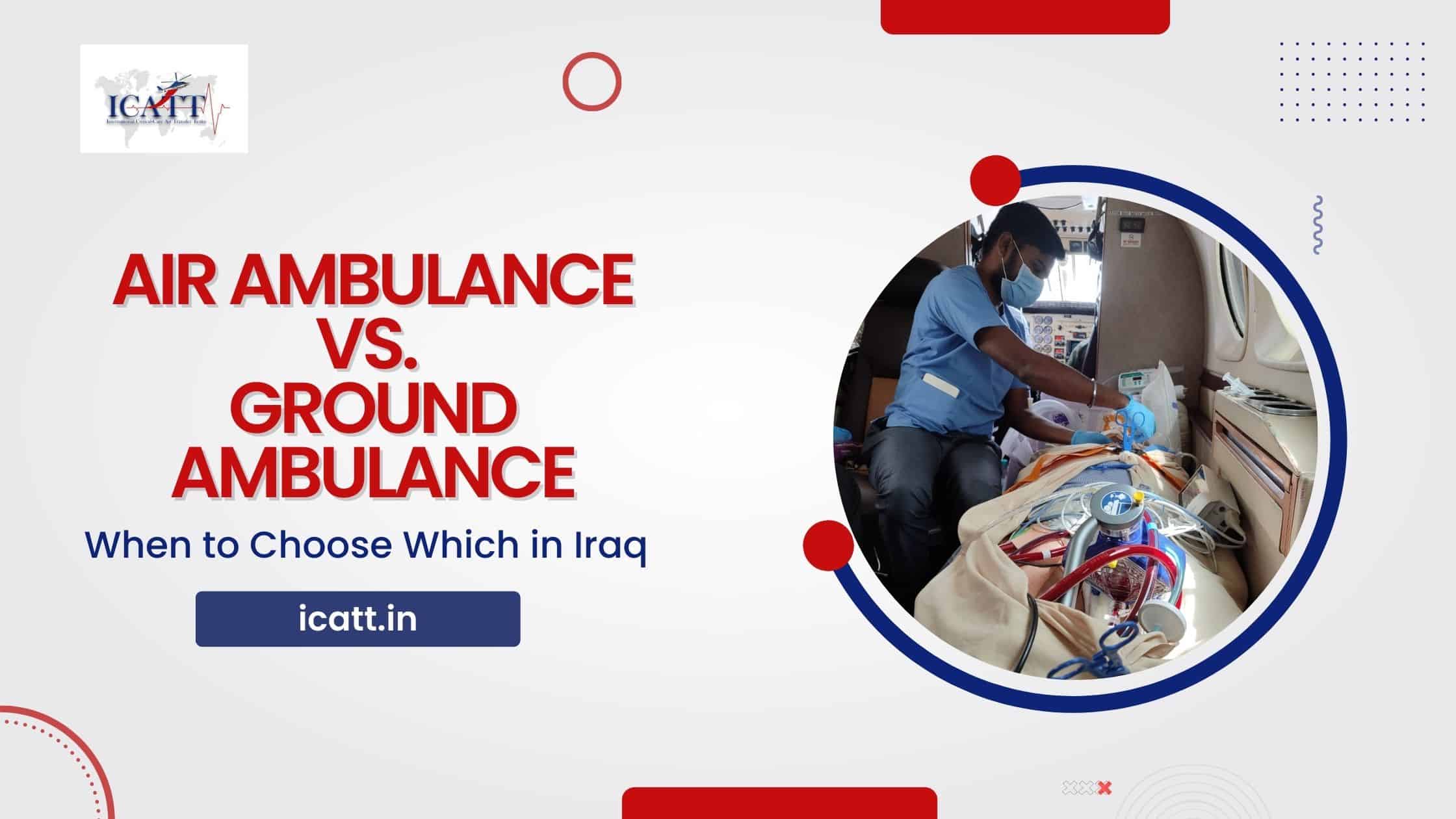
In air ambulance services, a physician-led crew manages high-acuity transfers and performs emergency interventions to actively maintain stability during transit. Continuous cardiac monitoring, advanced ventilator support, regulated medication infusion, and maintenance of oxygenation, blood pressure, and sedation ensure uninterrupted critical care. Helicopters retrieve patients from offshore and remote industrial locations. They reduce time to hospital care and bypass terrain or road limitations.
When to Choose an Air Ambulance in Qatar
An Air Ambulance Qatar becomes the right option when road transfer cannot meet the required treatment timeline or when the patient needs continuous critical care during transport. Here are the situations where you should consider this option:
- Severe Trauma Where Road Time Compromises Survival Probability
Major trauma often deteriorates quickly because bleeding and brain injury progress during delays. Rapid transfer matters most when surgery or advanced critical care must start as soon as possible. Air transport becomes appropriate when location or distance makes road transfer too slow for safe trauma timelines. The choice then supports faster access to operative care and intensive monitoring. - Time-Sensitive Stroke or Cardiac Events Outside Immediate Tertiary Access
Stroke and acute myocardial infarction require intervention within defined treatment windows, which makes transport time a decisive factor. Air Ambulance Qatar becomes appropriate when ground travel would delay arrival at centers equipped with catheterization laboratories and interventional stroke capability. Faster transfer protects neurological tissue and cardiac muscle by reducing time to definitive reperfusion therapy. - Remote Industrial or Offshore Emergencies
Qatar’s offshore installations and remote industrial zones create access constraints that extend retrieval time. Road evacuation from such sites often involves long distances and routing limitations. Air transport is appropriate when direct pickup gets the patient to the hospital faster and lowers the risk of their condition worsening. Helicopter evacuation supports this approach because it bypasses terrain constraints and delivers direct routing to advanced facilities. - Neonatal and Pediatric Transfers Requiring Specialized Critical Care Support
Critically ill neonates and pediatric patients require controlled temperature and continuous monitoring. These patients can deteriorate rapidly during transfers that lack intensive care capability. Air transport becomes appropriate when the receiving facility offers specialized neonatal or pediatric intensive care and when road travel duration raises clinical risk. The choice supports stable physiology through specialized equipment and trained retrieval teams. - International Medical Evacuation That Needs ICU-Level Continuity
Some cases require transfer to specialized centers outside Qatar because of treatment complexity. Ventilator dependence, hemodynamic instability, and continuous medication infusion demand uninterrupted critical care supervision during long-distance movement. In such situations, Air Ambulance Qatar provides ICU-level monitoring from departure through arrival. This approach maintains physiological stability and supports coordinated handover so definitive treatment continues without interruption.
Overview of Ground Ambulance Services
Ground ambulance services in Qatar deploy quickly across Doha and nearby areas. They enable rapid pickup and early stabilization, while direct routing reduces travel delays and supports timely arrival at emergency departments and specialty centers. During transit, advanced life support measures such as cardiac monitoring, defibrillation, oxygen therapy, and emergency medications help maintain physiological stability until hospital handover.
Road services remain operational during weather disruptions and airspace restrictions, which ensure consistent emergency coverage when flight deployment is limited. They are also well-suited for planned inter-facility transfers that require supervised, monitored movement rather than time-critical intervention, with structured handover at the receiving facility to maintain continuity of care. Because road transport involves fewer coordination steps than aviation deployment, activation is faster for short distances, often providing the quickest door-to-door transfer when the patient is stable.
When to Choose Ground Ambulance in Qatar
Ground ambulances in Qatar are the right choice when road transfer can reach the hospital within a safe time frame, and the patient can be safely monitored and treated during the journey. Here are the situations where a ground ambulance in Qatar is the appropriate choice:
- Short-Distance Emergencies Inside Doha and Nearby Municipalities
Ground transport is best for emergencies that occur close to tertiary hospitals. Road routing supports quick arrival at trauma and cardiac centers when the distance remains manageable. This choice works because stabilization begins on scene and continues seamlessly during transit. Treatment access stays timely because travel time remains predictable in most urban corridors. - Stable Patients Who Need Monitored Transport
Ground transfer is also suitable for patients with stable vital signs and symptoms controlled by standard pre-hospital care. Monitoring during transit supports early detection of change rather than constant intervention. This choice protects safety while keeping the workflow simple and fast. Clinical teams still prioritize direct transfer to the correct facility based on presenting complaints. - Inter-Facility Transfers That Are Not Time-Critical
Ground transport fits hospital-to-hospital transfers where the goal is continuity of care rather than urgent intervention within narrow windows. These transfers often involve imaging referrals or specialty consultations. Patient stability supports road transfer because the risk remains low during the planned route. The receiving team can prepare for handover through structured communication. - Cases Where Aviation Adds Delay Rather Than Speed
Aviation requires activation time and transfer logistics at both ends. Ground transport becomes the better choice when road transfer would arrive sooner than air travel would allow. This situation is common in urban settings where hospital proximity is high. The decision protects treatment timelines because speed depends on total door-to-door time rather than flight time alone. - Conditions That Limit Safe Flight Operations
Weather restrictions and operational clearance can prevent rapid aircraft deployment. Ground transport maintains access to care when aviation cannot launch safely. Clinical teams then use direct routing and continuous monitoring to protect stability during transit. This choice preserves reliability when immediate transport remains necessary.
Air vs Ground Ambulance: Quick Comparison
Below is a quick comparison to help determine the most appropriate transport method based on clinical urgency, distance, and level of care required:
| Criteria | Air Ambulance | Ground Ambulance |
| Use Case | Long-distance or time-critical transfer | Short to mid-distance emergencies |
| Speed Advantage | Faster over large distances | Faster to dispatch within city |
| Clinical Care | ICU-level care during transport | Advanced life support monitoring |
| Best For | Stroke, cardiac events, complex transfers | Stable patients needing rapid hospital access |
| Coordination | Requires aviation planning | Direct road routing |
| Distance Fit | Regional or international movement | Urban transport across Qatar |
| Decision Driver | When time saved improves the outcome | When road access meets treatment window |
Conclusion
Medical transport decisions in Qatar require structured assessment grounded in evidence-based emergency medicine. An air ambulance Qatar service provides advanced critical care across distance and international boundaries. Ground ambulances deliver effective stabilization within urban environments and stable transfer scenarios.
A clear understanding of when to choose an air ambulance in Qatar improves survival probability and preserves healthcare resources. Effective emergency transport in Qatar depends on aligning clinical severity with transport capability through disciplined medical evaluation rather than assumption.
For immediate medical evacuation support and coordinated patient transfers, contact ICATT. Our clinical and logistics teams operate 24/7 to assess urgency and care requirements, recommending the safest transport solution for every critical situation.