Medical transport decisions carry clinical and financial consequences. A delayed transfer can worsen patient outcomes, especially in trauma, stroke, cardiac emergencies, and complex inter-hospital referrals. Iraq presents a setting where transport choices matter even more because response times can vary across cities, highways, border corridors, industrial zones, and remote locations. The right decision depends on the patient’s condition and the level of care required during transfer.
The comparison between road and air medical transport is not a matter of preference. It is a matter of fit. Some emergencies require a rapid transfer supported by advanced onboard care. Other cases are better managed through a road ambulance that can reach the patient quickly and move them to a nearby facility at a lower cost. This distinction shapes the role of emergency transport providers in Iraq across routine transfers and life-threatening cases.
Why the Choice Matters in Iraq
Iraq’s healthcare access pattern is uneven across regions. Major cities offer stronger hospital capacity and diagnostic infrastructure. Smaller towns and distant work sites often rely on initial stabilization followed by transfer to a better-equipped center. That gap makes transport strategy a clinical decision rather than a logistical afterthought.
A patient with severe internal bleeding or a time-sensitive neurological event may require a transfer path that reduces delay and supports ICU-level monitoring. A stable patient who needs basic monitoring over a shorter route may do well in a road ambulance. That is the practical context behind when to choose air ambulance in Iraq and when ground transport remains the better option.
What Ground Ambulance Services Are Designed to Do
Ground ambulances form the base layer of emergency response. They are suited to urban pickups and cases where roads offer a direct and reliable route. Their clinical setup varies by provider, though most are designed for pre-hospital stabilization and transport under paramedic supervision.
Their strongest advantage is accessibility. A road ambulance can usually be dispatched quickly inside cities and can move directly from homes, clinics, public roads, and industrial areas to the nearest appropriate facility. That makes ground transport central to emergency transport in Iraq operations in dense population centers and local emergency calls.
Ground ambulances are also more practical in non-critical transfers. A patient discharged from one hospital and referred to another for planned treatment usually does not require aircraft transport. Cost also matters here. Road transport is usually more economical, which makes it appropriate where speed is important but not decisive.
What Air Ambulance Services Are Designed to Do?
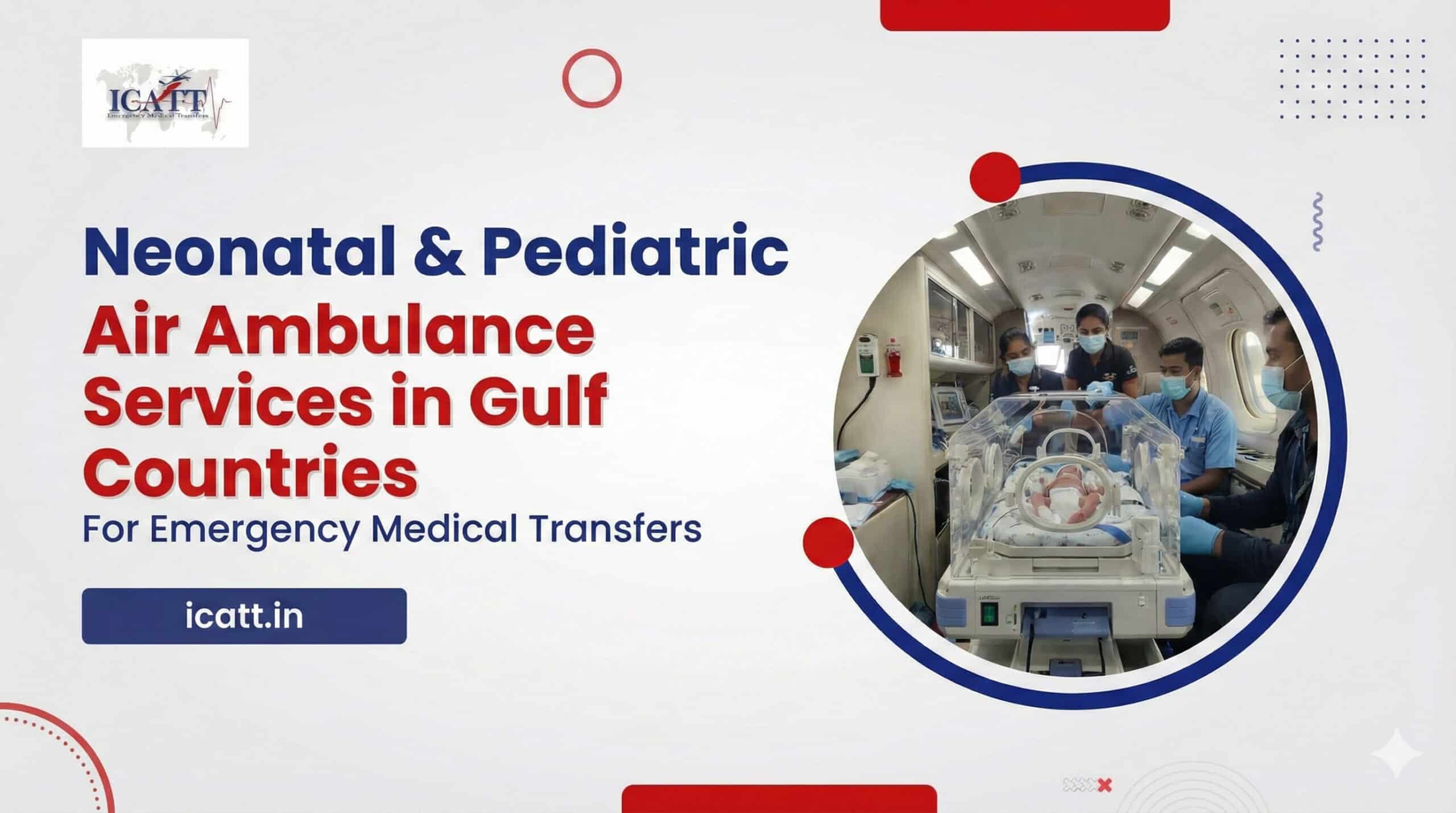
An air ambulance Iraq service is built for speed and high-acuity care. Aircraft used for medical transfer are configured to support critical patients during flight. The onboard team may include flight paramedics and physicians trained in emergency retrieval medicine, depending on the case.
Their value is clearest in situations where distance threatens survival or where the patient cannot tolerate a long road journey. A helicopter or fixed-wing aircraft can reduce transfer time between distant cities and can support referrals to regional or international hospitals. That speed matters in emergencies where treatment windows are narrow, and deterioration can happen during transit.
The relevance of air ambulance Iraq services has grown in settings such as trauma evacuation, oil and gas site emergencies, and cross-border medical transfer. These are not routine transport cases. They require a transport platform that combines rapid movement with advanced medical supervision.
The Core Difference Between Air and Ground Transport
The main difference is not simply speed. The real difference lies in how speed interacts with clinical risk. A patient with a fractured limb and stable vital signs may reach a hospital safely by road. A patient with severe burns, stroke symptoms, sepsis, or multiple injuries may need a faster transfer with stronger onboard support.
Ground ambulances are highly effective when the destination is close, and the patient can be stabilized with standard equipment. Air transfer becomes more relevant as distance increases, and the patient’s condition becomes more fragile. That is the framework clinicians use to assess when to choose an air ambulance in Iraq in a disciplined and medically grounded way.
When Air Ambulance Is the Better Choice
Critical care transfer is the clearest indication. A patient who needs ventilatory support or specialist intervention at a tertiary center may not be well served by a long road journey. When to choose an air ambulance in Iraq becomes a question tied to time-sensitive medicine rather than convenience in such cases.
Long-distance inter-city transfer is another major use case. A road transfer between distant regions can take many hours, depending on route conditions and security constraints. A patient with traumatic brain injury or acute coronary syndrome may not have that margin. An air ambulance Iraq provider can compress transfer time and connect the patient to definitive care more quickly.
Remote-site evacuation also supports the case for air transfer. Industrial zones, border areas, desert operations, and isolated worksites may lack rapid road access to advanced care. A critically ill worker in such a location often requires an evacuation that bypasses road delay altogether. This is a key area where air ambulance Iraq services play a direct operational role.
International transfer adds another layer. Some patients in Iraq require treatment in neighboring countries or in specialist centers abroad. Commercial travel is often unsuitable for unstable patients. Medical aircraft provide continuous supervision and space for essential critical care interventions. That makes air transfer the safer path in select cross-border referrals.
When Ground Ambulance Is the Better Choice
Ground transport remains the correct option in a large share of medical transfers. A short trip to the nearest emergency department does not call for aircraft deployment. A stable patient who needs observation or supervised movement between facilities can usually be managed well by road.
City-based emergencies also favor ground response because access time to the patient may be shorter than arranging air movement. A local ambulance can reach the scene and move them to a hospital without the added coordination required for aviation support. That is why emergency transport systems in Iraq continue to rely heavily on road ambulances for first-line emergency care.
Weather and operational constraints also matter. Aircraft cannot always launch safely under poor conditions. Ground transport offers greater continuity in situations where aviation is delayed or unavailable. Clinical urgency, therefore, must be weighed against practical deployment realities.
Clinical Factors That Shape the Decision
Patient acuity remains the first filter. Severe trauma, stroke, cardiac compromise, respiratory failure, neonatal emergencies, and major burns often justify a closer look at air transfer. Medical teams assess whether the patient is stable enough for road travel and whether a delay may worsen the prognosis.
Distance is the second filter. A case that is manageable by road within thirty minutes may become risky over five or six hours. Travel time changes the transport equation. That is why hospitals and retrieval teams examine not only the map distance but the realistic time to definitive care. This is central to understanding when to choose an air ambulance in Iraq in a way that aligns with actual patient risk.
Level of onboard care is the third filter. Some patients need advanced airway management or critical care interventions during transfer. Aircraft configured for medical retrieval can support those needs better than a standard road ambulance in select cases. The decision should always match the transport mode to the clinical requirement.
Cost Should Be Judged in Context
Air transfer costs more than road transfer. Aircraft readiness, aviation crew, medical specialists, equipment, and operational coordination all raise the price. Yet cost should be evaluated against the consequences of delay. A slower transfer may appear cheaper at the dispatch stage, but can become far more expensive if the patient deteriorates and requires more intensive treatment later.
This does not mean air transfer is the default. It means value should be judged in a clinical context. A stable patient over a short distance usually does not benefit from aircraft use. A critically ill patient facing a long transfer may benefit greatly from air ambulance Iraq support despite the higher upfront cost.
A Practical Framework for Decision-Making
The most reliable approach is structured triage. Teams should ask four linked questions. First, how urgent is the patient’s condition? Second, how far is the receiving facility, and how long will the journey really take? Third, what level of care is needed during transfer? Fourth, do operational conditions support rapid and safe deployment?
This framework brings clarity to when to choose an air ambulance in Iraq and when a ground unit remains the more appropriate resource. It also reduces the risk of making transport decisions based on habit rather than medical fit.
Air Ambulance vs Ground Ambulance: Key Differences
| Factor | Ground Ambulance | Air Ambulance |
| Speed | Moderate, depends on traffic | Extremely fast for long distances |
| Coverage | Local or regional | National and international |
| Terrain limitations | Restricted by road access | Can reach remote areas |
| Medical equipment | Basic to advanced life support | ICU-level equipment |
| Cost | Lower | Higher due to aircraft and crew |
| Use cases | Urban emergencies | Critical long-distance transport |
Conclusion
The choice between air and ground ambulance in Iraq should be based on patient acuity and onboard care requirements. Ground ambulances remain essential for local emergencies and stable transfers. Air ambulance Iraq services become more appropriate in critical care cases and long-distance referrals. A strong emergency transport Iraq strategy depends on selecting the transport mode that matches the clinical reality of the case. That is the basis for safe transfer and better patient outcomes.
Need rapid and reliable medical evacuation in Iraq? ICATT provides advanced air ambulance services in Iraq with critical care medical teams and fully equipped aircraft. Contact ICATT today to arrange safe emergency transport in Iraq when every minute matters.